
Having a website is an important step towards building an online presence, but it does not automatically guarantee that potential customers will find your business on Google.
With millions of websites competing for attention, businesses need an effective strategy to improve their search visibility and reach the right audience. This is where Search Engine Optimization (SEO) becomes important.
SEO helps businesses improve their website’s presence in organic search results, attract relevant visitors, and make it easier for potential customers to discover their products and services.
Whether you operate a pharmaceutical company, manufacturing business, e-commerce store, or professional service organization, a well-planned SEO strategy can support your long-term digital growth.
In this guide, we will explain what SEO is, why it matters, its major components, and the strategies businesses can use to improve their online visibility.
What Is Search Engine Optimization (SEO)?
Search Engine Optimization (SEO) is the process of improving a website so that search engines can understand its content and users can discover it through relevant search queries.
When people search for products, services, or information on Google, search engines evaluate many signals to determine which pages are most relevant and useful.
SEO involves improving different aspects of a website, including:
Keyword research
On-page SEO optimization
Technical SEO
Website content optimization
Internal linking
Link building
Mobile usability
Website performance
The objective is to make your website more discoverable and useful for people searching for information related to your business.
Why Is SEO Important for Your Business?
Search engines are an important source of information for people researching products and services. A strong SEO strategy helps businesses reach potential customers at the time they are looking for relevant information.
1. Improves Website Visibility
SEO helps your website become more visible for relevant search queries.
By optimizing website pages around useful keywords and search intent, businesses can improve their chances of appearing in relevant organic search results.
2. Attracts Relevant Organic Traffic
Organic traffic refers to visitors who reach your website through unpaid search results.
Targeting relevant keywords helps attract visitors who are interested in your products, services, or industry information.
3. Builds Brand Credibility
A well-organized website with useful content and clear information creates a professional online experience.
Consistent search visibility can also help more people discover and become familiar with your brand.
4. Supports Long-Term Marketing Goals
Unlike campaigns that depend entirely on ongoing advertising budgets, SEO can continue attracting organic visitors as optimized pages remain useful and discoverable.
However, maintaining SEO performance requires regular monitoring, content improvements, and technical maintenance.
5. Helps Generate Business Enquiries
When your website attracts relevant visitors, clear service pages, contact information, enquiry forms, and useful calls to action can encourage potential customers to connect with your business.
Different Types of Search Engine Optimization
A complete SEO strategy includes several areas of optimization. Each area supports a different part of website performance and search visibility.
1. On-Page SEO
On-page SEO focuses on optimizing the content and HTML elements of individual website pages.
Important on-page SEO activities include:
Keyword research and placement
SEO title optimization
Meta description writing
Proper H1, H2, and H3 headings
Content optimization
Image alt text
Internal linking
Descriptive URL structure
For example, if your business provides pharmaceutical website development, the relevant service page should clearly explain that service and use appropriate search terms naturally.
2. Off-Page SEO
Off-page SEO includes activities performed outside your website to help build its reputation and visibility.
Common activities include:
Relevant link building
Business directory listings
Brand mentions
Digital PR
Industry-related collaborations
Local business citations
The focus should be on earning relevant, trustworthy links rather than creating large numbers of low-quality backlinks.
3. Technical SEO
Technical SEO focuses on helping search engines discover, crawl, and understand your website.
Important technical SEO areas include:
XML sitemap
Robots.txt configuration
Website indexing
HTTPS security
Mobile-friendly design
Website loading performance
Canonical URLs
Redirect management
Structured data where appropriate
Technical SEO helps create a strong foundation for search engine discovery and website usability.
4. Local SEO
Local SEO helps businesses improve their visibility for location-related searches.
For example, a company providing website development services in Chandigarh may want to reach people searching for web development agencies in that area.
Important local SEO activities include:
Google Business Profile optimization
Accurate business contact details
Local keyword targeting
Location-specific service pages
Customer reviews
Consistent business information across relevant directories
5. E-Commerce SEO
E-commerce SEO focuses on improving the organic visibility of online stores and product pages.
Important activities include:
Product title optimization
Unique product descriptions
Category page optimization
Product image alt text
Internal linking
Product structured data
Duplicate URL management
Faceted navigation management
A well-optimized online store makes it easier for customers to discover relevant products through search engines.
Effective SEO Strategies to Improve Website Rankings
SEO is not a one-time activity. It requires a consistent approach based on website quality, user needs, competition, and search performance.
Here are some important strategies businesses should consider.
1. Conduct Proper Keyword Research
Keyword research helps identify the words and phrases people use when searching for products, services, and information.
Before selecting keywords, consider:
Search intent
Keyword relevance
Search volume
Competition
Business objectives
Target audience
Choose keywords that accurately represent your services and create useful pages around them.
2. Create Helpful and Original Content
Content plays an important role in helping search engines and visitors understand your website.
Publish informative service pages, blog articles, guides, and FAQs that answer genuine audience questions.
Avoid duplicate content, unnecessary keyword repetition, and articles created only to include keywords.
3. Optimize Page Titles and Meta Descriptions
Every important page should have a clear and descriptive title and a relevant meta description.
For example:
SEO Title: Professional SEO Services to Grow Your Business Online
Meta Description: Explore professional SEO services to improve website visibility, attract relevant organic traffic, and support long-term business growth.
These elements help communicate what users can expect from a page in search results.
4. Improve Website Speed and Mobile Experience
A website should load efficiently and work smoothly across mobile phones, tablets, and desktops.
Consider optimizing images, reducing unnecessary scripts, using reliable hosting, and improving page structure.
A good user experience makes it easier for visitors to explore your website.
5. Build Relevant Backlinks
Backlinks are links from other websites pointing to your website.
Relevant and trustworthy backlinks can help search engines discover your pages and provide additional context about your website’s reputation.
Focus on useful industry resources, genuine business partnerships, quality directories, and relevant publications.
Avoid buying manipulative links or participating in link schemes.
6. Strengthen Internal Linking
Internal links connect related pages within your website.
For example, a blog about SEO can link naturally to your SEO Services page, Website Design & Development page, and Contact Us page.
Use descriptive anchor text so visitors can understand where each link will take them.
7. Monitor SEO Performance
Regular monitoring helps businesses understand what is working and where improvements are needed.
Useful tools include:
Google Search Console
Google Analytics
Google PageSpeed Insights
Keyword tracking tools
Website crawling tools
Monitor organic clicks, impressions, search queries, indexed pages, website performance, and relevant conversions.
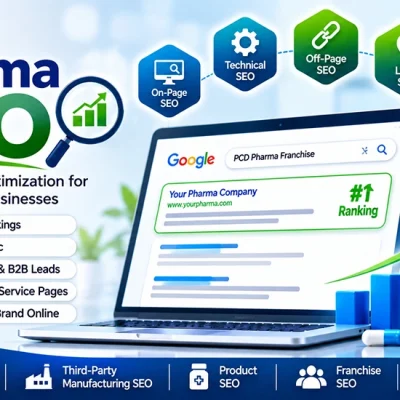
SEO for Pharmaceutical Companies
Pharmaceutical companies operate in a competitive and specialized industry. Their websites need clear business information, accurate product details, and useful content that meets the needs of their audiences.
SEO can help pharmaceutical businesses improve visibility for relevant business-related searches.
Some important pharmaceutical SEO activities include:
1. Pharma Keyword Research
Identify relevant search terms related to pharmaceutical manufacturing, PCD pharma franchise opportunities, product categories, and third-party manufacturing services.
2. Pharmaceutical Website Optimization
Create clear pages for company information, manufacturing capabilities, product catalogues, franchise opportunities, and business enquiries.
3. Product Page Optimization
Use accurate product names, descriptions, specifications, and relevant images.
Ensure that product-related information is reviewed for applicable regulatory and advertising requirements.
4. Pharma Content Marketing
Publish useful articles about pharmaceutical business processes, manufacturing services, industry developments, and other relevant topics.
Health-related information and medicine claims should be accurate, appropriately supported, and reviewed by qualified professionals where necessary.
5. Relevant Link Building
Build relationships with relevant industry publications, business directories, and trustworthy websites to support brand visibility.
Common SEO Mistakes Businesses Should Avoid
Many businesses struggle with SEO because of avoidable mistakes.
Some common problems include:
Targeting keywords without understanding search intent
Repeating keywords unnaturally
Publishing duplicate or thin content
Ignoring technical SEO issues
Using misleading page titles
Building irrelevant or spammy backlinks
Neglecting mobile usability
Forgetting internal links
Ignoring Google Search Console data
A regular SEO audit can help identify these issues and prioritize improvements.
How to Choose the Right SEO Agency?
Choosing an SEO agency is an important decision because SEO involves ongoing work and continuous evaluation.
Before selecting an agency, consider the following:
Review its SEO experience and portfolio.
Understand its keyword research process.
Ask about on-page and technical SEO activities.
Check its approach to content optimization.
Understand its link-building methods.
Ask how progress and results are reported.
Avoid agencies promising guaranteed Google rankings.
Confirm the scope of work and communication process.
A reliable SEO partner should explain its strategy clearly and focus on sustainable improvements rather than unrealistic ranking promises.
Why Choose AYUSHINFO SOLUTIONS for SEO Services?
A successful SEO strategy requires an understanding of business goals, website structure, target audiences, and search behaviour.
AYUSHINFO SOLUTIONS offers digital solutions designed to help businesses strengthen their online presence.
Our SEO-related services include:
Search Engine Optimization
On-Page SEO
Off-Page SEO
Technical SEO
Local SEO
E-Commerce SEO
Pharma SEO
Keyword Research
Website SEO Audits
Content Optimization
Whether you want to improve an existing website or build a stronger organic search presence, choosing the right SEO approach can help support your business objectives.
Conclusion
Search Engine Optimization (SEO) is an important part of building a strong online presence. It helps search engines understand your website and allows potential customers to discover your products and services through relevant searches.
By focusing on keyword research, helpful content, on-page optimization, technical SEO, relevant backlinks, and performance monitoring, businesses can develop a sustainable search visibility strategy.
SEO requires patience, consistency, and regular improvements. There is no guaranteed shortcut to the top of Google, but a well-planned, people-first strategy can create a stronger foundation for long-term organic growth.
If you want to improve your website’s search visibility, AYUSHINFO SOLUTIONS can help you explore suitable SEO services for your business.
Contact our team to discuss your SEO requirements.
Frequently Asked Questions (FAQs)
1. What is Search Engine Optimization (SEO)?
Search Engine Optimization (SEO) is the process of improving a website to help search engines understand its content and help users discover it through relevant organic search results.
2. Why is SEO important for businesses?
SEO helps businesses improve online visibility, attract relevant organic visitors, build brand awareness, and create opportunities for customer enquiries.
3. What are the main types of SEO?
The main types include on-page SEO, off-page SEO, technical SEO, local SEO, and e-commerce SEO.
4. How long does SEO take to show results?
SEO results vary depending on competition, website condition, content quality, technical issues, and the work being performed. Meaningful improvements often take several months, and there is no guaranteed timeline.
5. What is the difference between on-page SEO and off-page SEO?
On-page SEO focuses on improving elements within your website, such as content, titles, headings, and internal links. Off-page SEO focuses on external signals such as relevant backlinks and brand mentions.
6. Is technical SEO important?
Yes. Technical SEO helps search engines crawl and understand your website and supports important aspects such as indexing, mobile usability, security, and site performance.
7. Can SEO help generate business leads?
Yes. By attracting relevant visitors and providing useful service information with clear contact options, SEO can support business enquiries and lead generation.